Last Updated: May 2026. We research independently. Some links are affiliate links — this costs you nothing and helps fund our work.
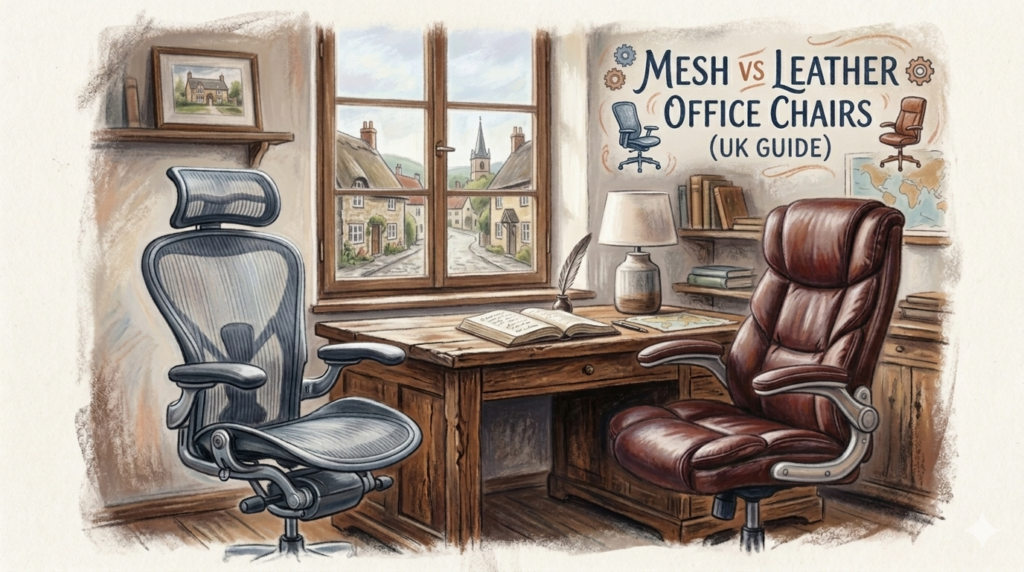
One of the most common decisions when choosing an office chair in the UK is mesh vs leather. Both materials are widely available, both have genuine advantages — but they are not equal in every situation.
Quick links:
👉 Ergonomic Chair Buying Guide →
This guide gives you the honest comparison based on what actually matters for desk workers: breathability, ergonomic support, long-session comfort, durability, and value.
The Short Answer
For most UK desk workers sitting 6+ hours daily, mesh is the better choice. It keeps you cooler, supports better posture, and is purpose-built for extended sitting.
Leather remains a legitimate option for shorter sessions, executive environments, or users who strongly prefer a plush cushioned feel.
Quick Comparison
| Feature | Mesh Office Chairs | Leather Office Chairs |
|---|---|---|
| Breathability | ⭐⭐⭐⭐⭐ | ⭐⭐⭐ |
| Long-Session Comfort | ⭐⭐⭐⭐⭐ | ⭐⭐⭐⭐ |
| Cushioning Feel | ⭐⭐⭐⭐ | ⭐⭐⭐⭐⭐ |
| Heat Retention | Low | High |
| Ergonomic Support | Excellent | Good |
| Maintenance | Low effort | Requires regular care |
| Best For | Long work sessions, home offices | Executive styling, shorter sessions |
Mesh Office Chairs — Detailed Assessment
Mesh chairs have become the dominant choice in ergonomic office furniture for good reason. The open weave structure solves a genuine problem: heat dissipation during prolonged sitting.
What Mesh Does Well
| Advantage | Why it matters |
|---|---|
| Airflow & temperature regulation | Continuous air circulation prevents heat buildup. In UK home offices without AC, this is critical. |
| Posture support | Quality mesh chairs follow spinal curvature, distribute weight evenly, promote neutral alignment. |
| Practicality | Lighter, easier to clean, more resistant to visible wear. No cracking or peeling. |
Where Mesh Falls Short
| Disadvantage | What it means |
|---|---|
| Firmer seat feel | Takes 1–2 weeks to adjust if coming from plush leather. Most adapt and prefer it long-term. |
| Premium price at top end | High-end ergonomic mesh chairs cost more. Mid-range options from SIHOO, Hbada offer great value. |
👉 Best Mesh Chairs UK (SIHOO M57) →
Leather Office Chairs — Detailed Assessment
Leather chairs have been the default for executive and corporate environments for decades. They retain real advantages in specific contexts.
What Leather Does Well
| Advantage | Why it matters |
|---|---|
| Cushioning & initial comfort | Soft, enveloping feel. Great for 2–4 hour sessions or roles with frequent desk breaks. |
| Aesthetic presence | Visual weight and authority. Suits boardrooms, executive offices, client-facing spaces. |
Where Leather Falls Short
| Disadvantage | What it means |
|---|---|
| Heat retention | Leather doesn’t breathe. Body heat accumulates. Becomes uncomfortable during long sessions, especially in warm rooms. |
| Variable ergonomic design | Many leather chairs prioritise appearance over genuine postural support. Check for lumbar adjustment, seat depth. |
| Maintenance | Genuine leather needs periodic conditioning. Faux leather peels and degrades within 2–3 years. |
Which Is Better for Back Pain?
For users managing back pain, ergonomic mesh chairs generally offer the more supportive environment.
The reasons are structural rather than material. High-quality mesh chairs are built around established ergonomic principles:
Adjustable lumbar support
Contoured backrests
Customisable seat depth
Important caveat: Material alone does not determine back comfort. A poorly designed mesh chair will still cause discomfort. Proper ergonomic adjustment matters more than any material choice.
👉 See: Best Ergonomic Chairs for Back Pain UK →
Ergonomics: The Factor That Matters Most
The biggest mistake buyers make is treating material as the primary decision. It is not.
Ergonomic specification determines long-term comfort and postural health. Material affects temperature regulation and feel, but it does not compensate for inadequate adjustability.
When evaluating any chair — mesh or leather — prioritise:
| Feature | Why it matters |
|---|---|
| Lumbar support | Adjustable in height (and ideally depth). Fixed lumbar rarely fits correctly. |
| Seat depth adjustment | Fits different leg lengths. Maintains thigh support without restricting circulation. |
| Armrest adjustability | Height minimum. 4D armrests for full neutral upper body positioning. |
| Recline with tension control | Supports natural movement. Reduces static spinal loading. |
| Seat height range | Must work with your desk height and body proportions. |
A mesh chair with all these features will serve most people significantly better than a leather chair without them — regardless of how comfortable the leather feels initially.
Which Material Lasts Longer?
| Material | Longevity | Maintenance |
|---|---|---|
| Quality mesh | 4–5+ years | Low. Tension remains consistent. No cracking or peeling. |
| Genuine leather | Many years (with care) | High. Requires regular conditioning to prevent drying/cracking. |
| Faux leather (budget) | 2–3 years | Low initially, but peels and degrades quickly. |
For most UK buyers choosing between a mid-range mesh chair and a mid-range leather chair, the mesh option is likely to maintain its functional quality better over 4–5 years of daily use.
Recommended Mesh Chairs for UK Buyers
| Chair | Best For | Key Features |
|---|---|---|
| SIHOO M57 | Best overall under £300 | Adjustable lumbar, 4D armrests, headrest included |
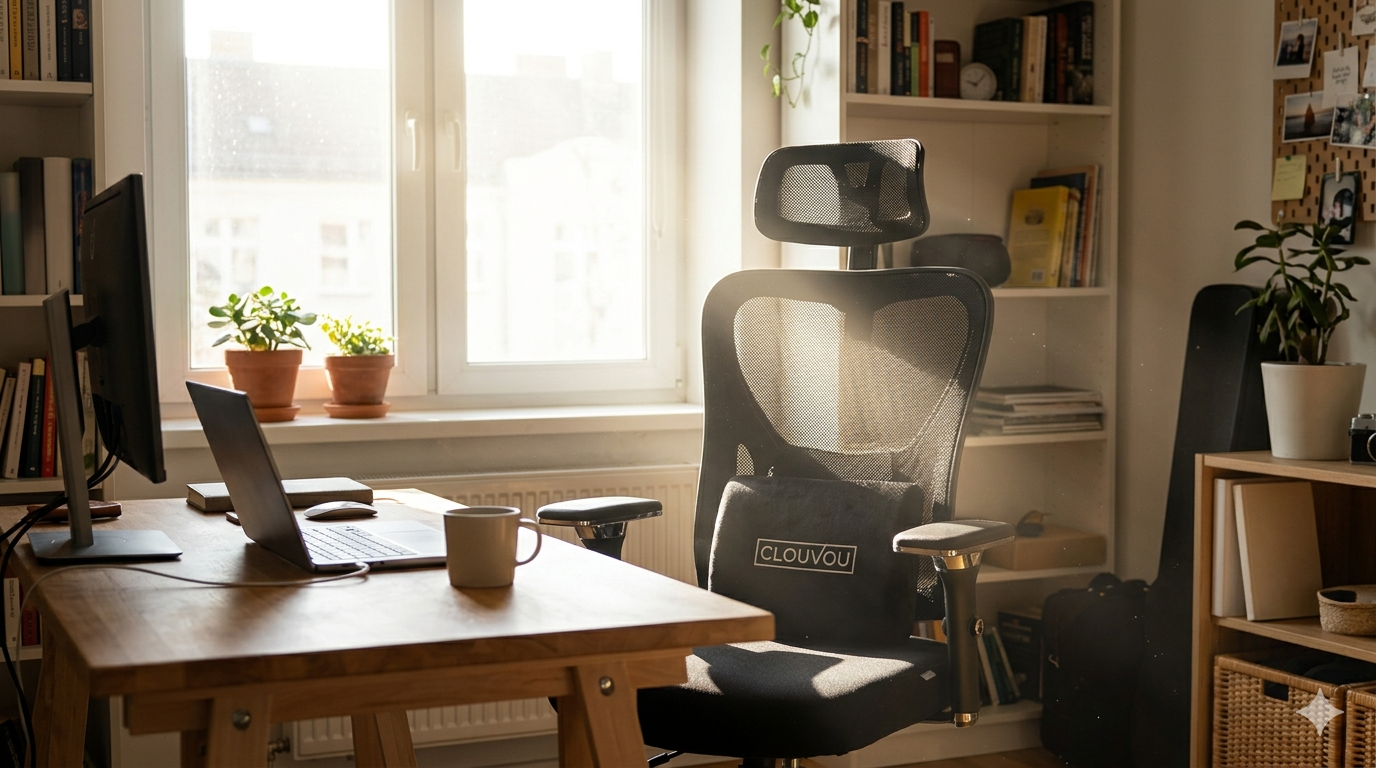
| CLOUVOU Clever Seat | Maximum adjustability | Seat depth adjustment, wide armrest range |
| SIHOO Doro C300 | Dynamic lumbar support | Moves with you, premium build |
| Hbada E3 Air | Mid-range value | Adaptive lumbar, full mesh construction |
👉 See: Best Ergonomic Chairs Under £300 UK →
Common Buying Mistakes
| Mistake | Why it’s wrong |
|---|---|
| Choosing based on appearance alone | A chair that looks professional may offer little ergonomic value. Prioritise adjustability. |
| Conflating softness with comfort | Soft feels good for an hour. After 6 hours, inadequate support becomes a real problem. |
| Ignoring adjustment range | A chair that can’t be set up for your body will underperform regardless of quality or material. |
| Underestimating heat | In warm rooms or UK summers without AC, heat retention in leather is a significant factor. |
Final Verdict
For the majority of UK desk workers — particularly those working 6+ hours daily in home offices — an ergonomic mesh chair is the more practical, better-supported, and more comfortable long-term investment.
Mesh chairs offer:
Superior airflow
Better posture support
Designed specifically for extended desk work
Leather chairs remain a sound choice for:
Users wanting a softer, traditionally styled seat
Executive/client-facing environments where aesthetics carry more weight
Sessions with frequent breaks and movement
Whichever material you choose, prioritise ergonomic adjustability above all else. The right chair, properly set up for your body, is one of the most effective investments you can make in your long-term health.
👉 See: Ergonomic Chair Buying Guide UK →
Frequently Asked Questions
Are mesh office chairs better for back pain?
In most cases, yes. Ergonomic mesh chairs typically offer more comprehensive lumbar support and are designed with sustained sitting in mind. Proper adjustment is critical — even the best chair will cause discomfort if not set up correctly.
Are leather office chairs comfortable for long sessions?
Leather chairs feel comfortable initially, but heat buildup and gradual padding compression make them less suited to sessions exceeding 4–5 hours. For shorter periods or environments where aesthetics are a priority, they remain viable.
Which material is better for long hours?
Mesh, for most users. The combination of airflow, consistent support, and ergonomic design makes mesh chairs better suited to full working days.
Do leather office chairs get hot?
Yes. Leather does not breathe and retains body heat, which becomes noticeably uncomfortable during extended sitting — particularly in warmer conditions or UK home offices without air conditioning.
Which material lasts longer?
Quality mesh typically maintains its functional properties better over time with less maintenance. Faux leather degrades relatively quickly. Genuine leather maintained correctly can last many years but requires regular conditioning.
Does chair material affect posture?
Indirectly. Mesh chairs tend to be paired with more comprehensive ergonomic features, and the material conforms more naturally to the back. However, ergonomic design and correct adjustment have a far greater impact on posture than material choice alone.